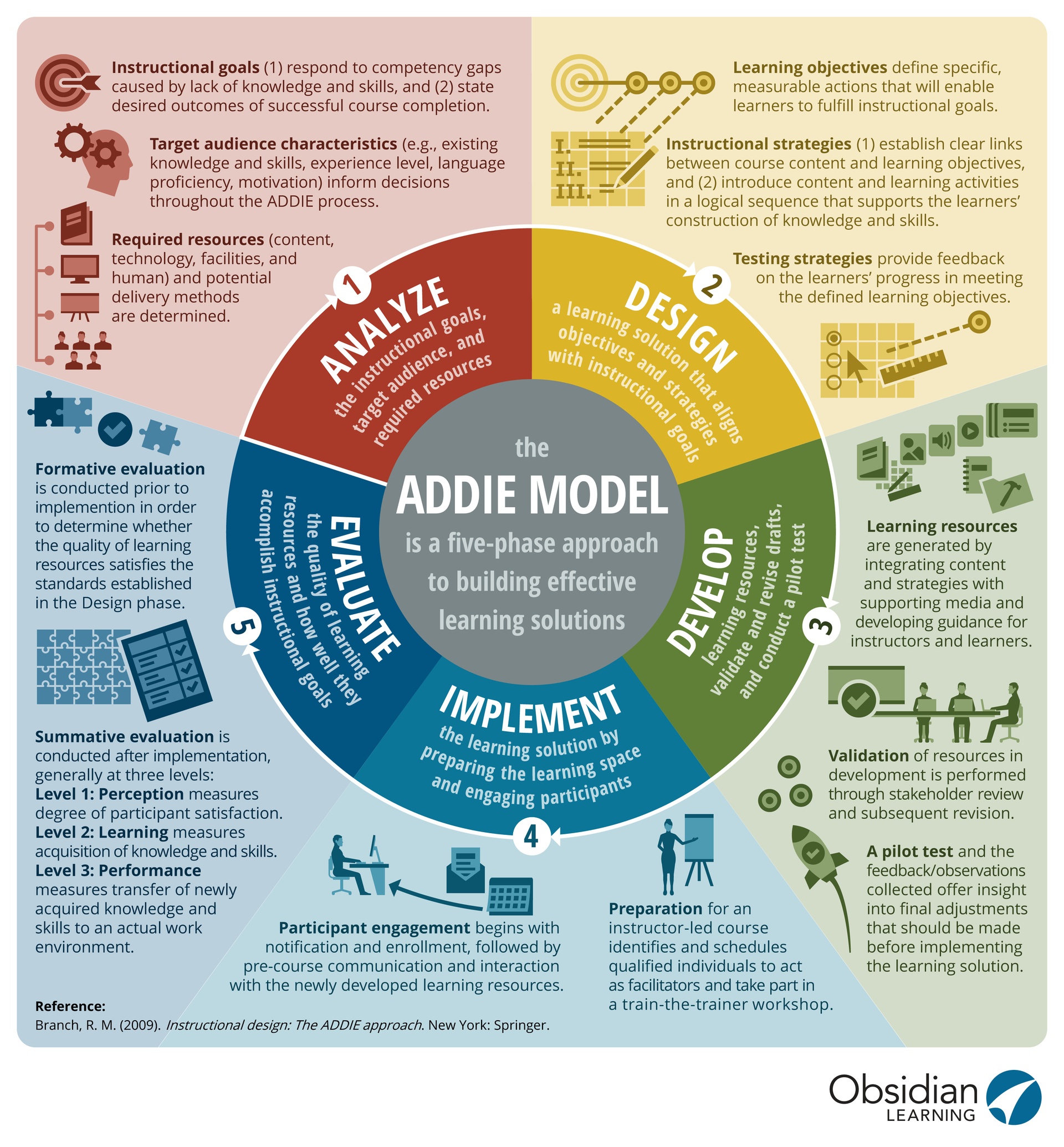
The five phases—analysis, design, development, implementation, and evaluation—represent a dynamic, flexible guideline for building effective training and performance support tools. What is the addie model The addie model is a framework used in instructional design and training and development to guide the creation of learning experiences and performance support tools
ADDIE Model | Instructional design, Teaching technology, Learning theory
The acronym stands for five phases— analyze, design, develop, implement, and evaluate
Addie is a learning development model that stands for analysis, design, development, implementation, and evaluation
The addie model is an instructional design framework that training developers use Addie stands for analyze, design, develop, implement, and evaluate. In this article, we’ll explore what the addie model is in detail, the advantages and disadvantages of the model, and some addie model examples so that you can start using it today. The addie model was created by florida state university for the military in the 1970s
The name of the model is an acronym for the 5 stages of design Analysis, design, development, implementation, and evaluation and was meant as a guideline to create effective training and instructional materials.